





Proper safety precautions for selecting, installing and maintaining seal systems
When it comes to operating mechanical seal systems in pumps, safety is a prime concern. The potential hazards associated with operating and maintaining pumps' seal systems improperly include fire, explosion, contamination and adverse health and envi-ronmental effects. The results can be catastrophic.
By understanding seal systems and operating them correctly, users can minimize safety hazards. Keeping things running smoothly will extend the life of the seal system and pumping equipment, saving the end user significant costs.
The Seal System
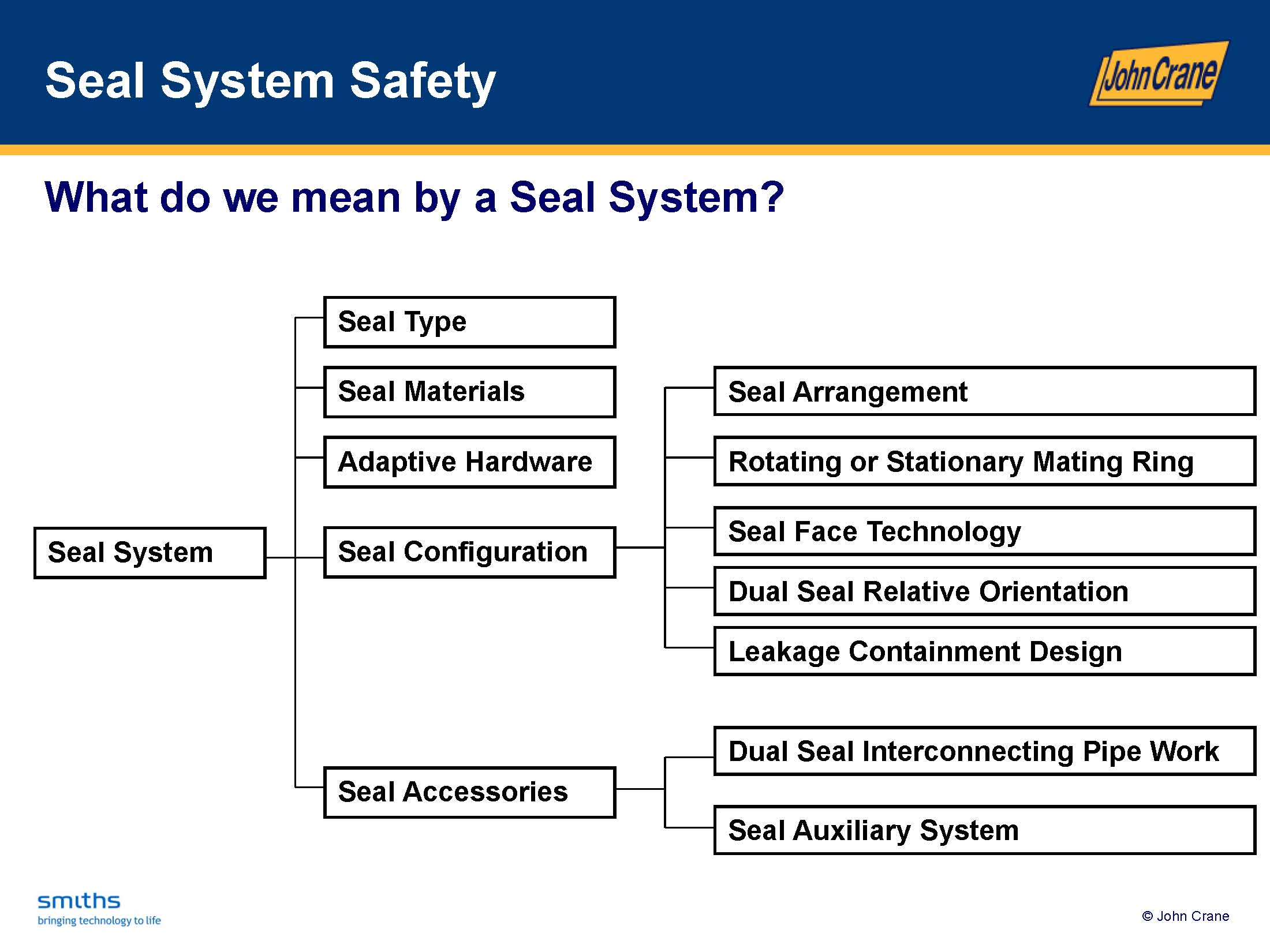
The term “seal system” refers to all aspects of the seal and its use in the pump, including:
- The type of seal, seal materials and any adaptive hardware
- The seal's configuration, including whether mating rings are rotating or stationary; the seal face technology; the relative orientation of any dual seals to each other, such as face-to-back, back-to-back or face-to-face; and the seal's leakage containment design
- The seal's accessories, including interconnecting pipe work between any dual seals and the seal's support system
 |
| Sealing system components |
The seal system's role in a pump is to minimize leakage of the pumped liquid from the area in the pump where the drive shaft enters or exits the casing. Depending on the type of pumped liquid, leaking fluid can be extremely dangerous, so seal systems help keep pumping equipment operating safely. Users should follow plant and local emergency response system rules when selecting a suitable seal system. Fluid can also leak from flange seals, gaskets or piping connections mounted to the casing directly or indirectly, so users should monitor those potential safety hazards as well.
Seal Safety Issues
Mechanical seals include parts that wear out over time. Seals generally operate with a low rate of acceptable controlled leakage, but if the seal is approaching the end of its life or fails prematurely, that leakage rate can climb to unacceptable levels.
Causes of premature seal failure include:
- Incorrect seal system assembly
- Incorrect pump installation
- Incorrect pump operation
- Failure of another pump component
- Changes in process conditions
In the past, a large percentage of component seals failed prematurely because they were incorrectly installed. The growing use of cartridge seals has eliminated many of these failures.
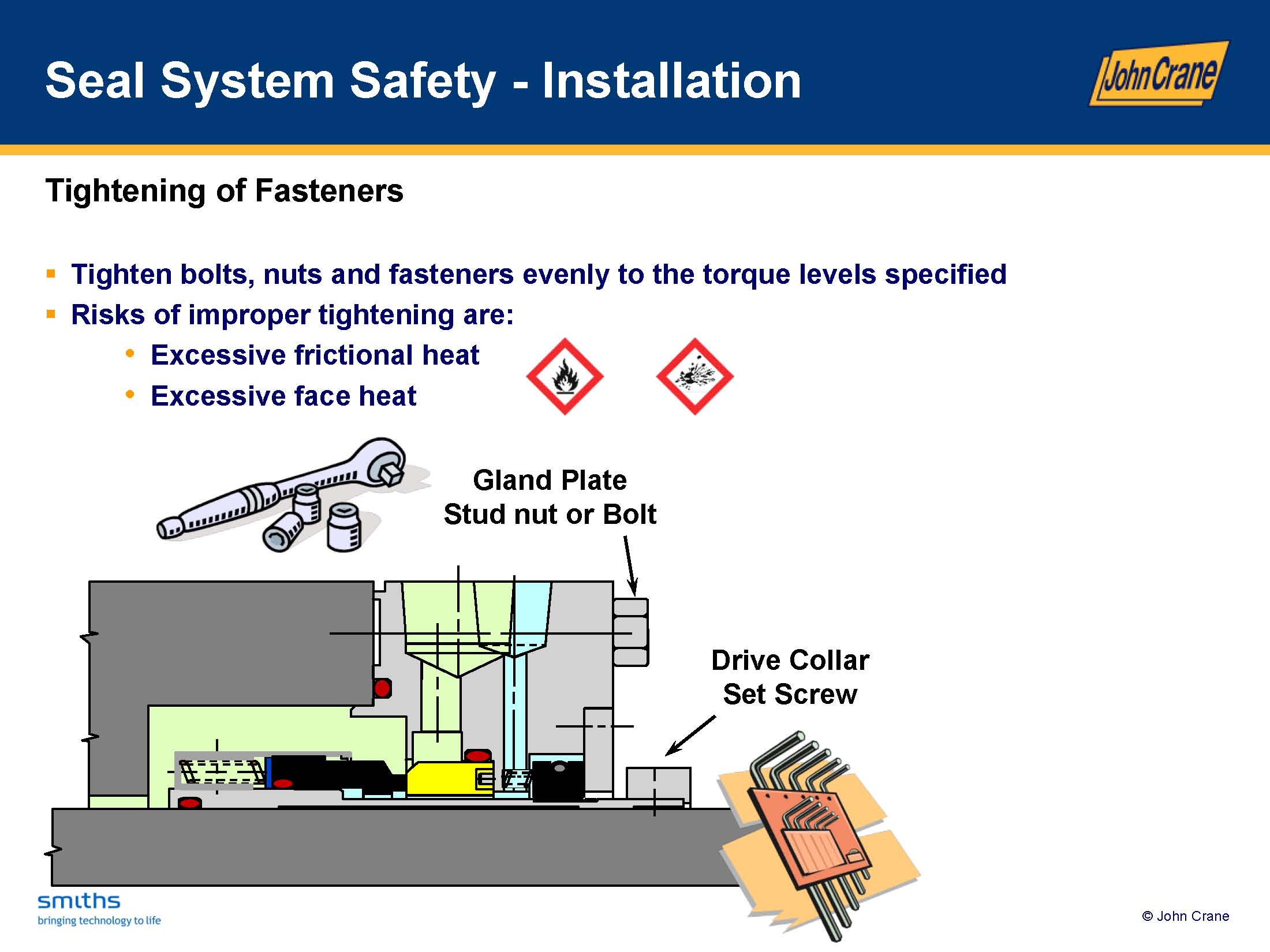 |
| Proper fastener tightening is the first step in successful installation. |
The risks due to excessive seal leakage depend on the pumped liquid's properties, the leakage rate and the surrounding envi-ronment. If the liquid is above its auto-ignition temperature, it can catch fire spontaneously or explode. A fire or explosion can also occur if the liquid or its vapors encounter an ignition source.
Hazards can also occur if seal faces are not lubricated properly. Most pump mechanical seals are wet designs, meaning that the radial face must be lubricated and cooled by a liquid, which, depending on the configureation, can be the pumped liquid or a separate buffer/barrier liquid. Without lubrication, the seal's rubbing surface can overheat leading to a fire or an explosion.
Selecting a Safe Seal
When selecting a seal system, pump users should ensure that the system will work with the pumped liquid at the pump's operating conditions. Conditions to consider include the operating pressure, temperature, maximum shaft speed and the external supply of any cooling, heating, quench, flush, barrier or buffer fluid. If any aspect of the pumping operation changes, review the seal system to ensure that it is still compatible.
Single and dual seal systems offer different types of safety mechanisms to mitigate leakage. Pump operators can use containment bushings to manage leakage in single seal systems. Dual seal configurations can include outer containment seals or pressurized barrier liquid to control leaking, which are smart options for particularly hazardous process fluids.
Some seals and support systems also feature alarms to warn users if leakage-rate levels are unacceptable. Users should know what steps to take if an alarm occurs and act promptly.
Seal System Installation
Installing the seal system properly is crucial for safe operation. Users should read all instruction manuals and keep these to-dos in mind:
- If the system includes a heavy cartridge seal that requires a crane, the seal should have a tapped hole in the gland plate for an eyebolt. The type, number and location of eyebolts that are needed vary depending on whether the equipment has a vertical or horizontal shaft, so use the correct kind.
- Tighten bolts, nuts and fasteners evenly to the specified torque levels, and fasten screws securely. Over-tightening gland bolts can create gland plate distortion, resulting in seal leakage.
- Align the shaft and gland plate correctly. If possible, check the drive shaft after assembly to make sure it can move freely.
- Verify that each port on the seal's cartridge is connected to the appropriate service. Refer to the specified API piping plan for guidance. If ports on the seal are not used, plug them with metal plugs instead of plastic plugs, which have lower temperature limits and can melt.
- Train your staff on how to respond to alarms.
- Ensure that interconnecting pipe work specifications minimize flow resistance and follow venting advice.
- Consult the seal's vendor with questions.
Operating the Equipment
Once the seal systems are installed, users should review the entire pump assembly to ensure that everything works correctly.
- Check the pump at the coupling to make sure the driver or motor is aligned properly.
- Make sure that the motor is rotating in the correct direction.
- Ensure that all alarms and transmitters are operating.
- Make sure that all valve positions are set correctly.
- If the support system includes a heat exchanger and the coolant supply includes isolating valves, install a pressure relief valve between the isolating valves to avoid the risk of explosion.
Proper pressures throughout the system are particularly important for safe operation. If the system includes a barrier system, the system's pressure should not fall below the seal chamber's pressure. The seal supplier may recommend a buffer/barrier fluid pressure based on the original operating conditions, but end users must verify compatibility. The barrier pressure rises and falls with the surrounding environment's temperature, particularly in piping API Plan 53B systems, so monitor the outside temperature while running the equipment.
The seal system can also climb above its maximum allowable working pressure while it is being filled, so pump operators should use the correct topping-up system and avoid releasing the barrier system's pressure while topping up. Based on the type of system, it may need to be topped up automatically or manually with a hand pump.
In addition, users should avoid running pumping equipment without liquid or with liquid that has high gas content. Doing so can overheat the seal's radial face and cause an explosion. If the system makes a squealing noise, it may indicate that the seal's radial face is not lubricated properly.
Preventative Maintenance
Regular plant tours and system maintenance allow operators to identify potential problems before they lead to a failure. Before performing maintenance on the seal system, make sure the machine is stationary, secured from unforeseen start-ups and blocked from the pumped liquid. Drain the pump completely, including any liquid in the seal chamber and auxiliary system. Users may need to purge the system with an inert gas to clear the pump of liquid.
During maintenance checkups, users should confirm that all seal system connections are leak-free and check the seal's leakage rate. An increasingly steady leakage rate normally indicates that the seal is failing.
Users also should measure the pump's vibration level, which can be a good indication of the machine's condition. In addition to posing safety hazards, high vibration levels can shorten the seal system's life, so correcting issues will preserve equipment life. Causes of high vibration include:
- Operating beyond the pump's allowable operating range
- Excessive pipe strain, which can distort the casing
- Inadequate coupling alignment
- Damaged, corroded or eroded pump components, especially those that control the radial location of the shaft to the casing
- Incorrect impeller adjustment for some pumps
- Inadequate tightening of hold-down bolts
- Worn bearings, which can develop into catastrophic seal and machine failure
For hot-running pumps, check the torque on the drive collar set screws annually, since vibration can loosen the screws.
Pump operators who need to transport used seal parts for repair should clean and decontaminate them using the manufacturer's instructions and attach appropriate safe handling instructions to the package. Users should also dispose of buffer/barrier liquids properly, since they may be contaminated.
Following proper safety measures can do more than help pump operators avoid disaster. By selecting, installing and maintaining seal systems correctly, end users can extend their equipment's life and lower their overall costs.