




Water is the most abundant liquid on the Earth's surface and is vital to many aspects of our daily lives. For these reasons, a wide variety of fluid handling applications involve transporting and/or pressurizing water in its liquid form. As a liquid, water is generally a neutral fluid that is easily handled without special considerations. However, water does present some unique sealing challenges that should be considered.
With the focus of this issue on pumps in water handling systems, this article highlights four potential challenges to successfully applying mechanical seals in these pumps.
- Freezing
- Flashing
- Scaling
- Ultra-Purity
- Freezing
Water is one of the few substances that expands when it transforms from a liquid to solid state. This expansion, which is about 9 percent, can cause damage to seal components, especially elastomeric secondary sealing elements. Icing in and around the flexibly mounted components of a pusher seal can also restrict axial movement, causing the dynamic secondary seal to hang-up, resulting in the separation of the mating faces. In addition, seal chamber piping plans that provide a water flush can become restricted or completely blocked with ice, especially for applications that are not operated continuously.
To minimize the damage risk, alternative secondary seal options—such as flexible graphite—should be considered. The dynamic secondary seal can be eliminated by selecting a welded metal bellows seal design. The seal operating environment can be protected from the effects of low temperature water or ice by introducing a heating spool between the back plate of the pump and the seal chamber. Electric heating cables can also be applied to the piping plans to provide heat tracing, preventing freezing in the piping of the auxiliary systems.
Flashing
Many applications employ water that is at or near its atmospheric boiling point of 100 degrees C (212 degrees F) and require consideration of the characteristics of water in its gas phase. Even at temperatures as low as 70 degrees C (160 degrees F), the viscosity of water is reduced to less than 0.4 centipoise (82.64 x 10⁻⁴ pounds/feet-second). In this condition, water cannot provide the lubricity necessary for successful operation of typical hard face material combinations.
Although water may remain in a liquid phase at the process pressure, it may transition to a gas phase as the water passes across the seal interface and drops to atmospheric pressure.
The addition of heat from friction between the mating seal faces also contributes to a reduction in the vapor pressure margin which further increases the instability of the fluid across the seal face.
In its gas form, water behaves much like a flashing hydrocarbon with respect to load support and lubrication at the seal faces. As a result, special considerations for the seal face design are required for these applications. In addition to lubrication property concerns of hot water, many common elastomers do not perform well in high temperature water. Special consideration must be given to secondary seal selection. Fluoroelastomer (FKM) o-rings, which are widely used in many chemical and petrochemical applications, can undergo severe degradation in a steam environment, resulting in leakage and secondary seal hang-up. In general, fluoroelastomers are not recommended for water applications above 70 degrees C (160 degrees F).
To mitigate the poor lubricity of hot water, hydropads and specially designed hydrodynamic surface topography may be applied to the seal faces. These features ensure that a liquid film exists across the majority of the seal face area and minimize or eliminate seal face contact forces. Hard face material combinations should be avoided in hot water applications and, whenever possible, carbon-graphite should be used as one of the mating seal faces to provide the needed tribological properties.
When abrasive solids or high pressures make carbon-graphite seal faces undesirable, hard face material combinations should only be applied as a part of an engineered sealing solution that addresses the risks of hard-versus-hard-face contact in a poor lubrication environment.
The fluid pressure in the seal chamber can also be increased using throat restrictions and auxiliary piping to increase the vapor pressure margin in the region of the seal faces. API Piping Plans 21 (recirculation from the pump discharge through an orifice and heat exchanger into the seal chamber) and 23 (recirculation via a circulating device through a heat exchanger and back into the seal chamber) can also be applied to reduce the temperature and increase the vapor pressure margin in the region of the seal faces. EPDM elastomers are generally recommended for secondary seals in steam applications.
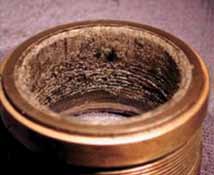
Figure 1. Calcium carbonate build up at the atmospheric side of a seal face
Scaling
Because of its polarity, water is often referred to as the “universal solvent” and un-softened or hard water typically carries high levels of dissolved minerals, such as calcium. These dissolved minerals can impact the reliability of mechanical seals. As noted previously, water will often transform from a liquid to a gas as it passes through the sealing gap between the mating faces.
During this transformation, dissolved minerals may precipitate from the solution and cause three-body abrasive wear across the seal faces. These deposits can also build up at the atmospheric side of the mechanical seal, leading to secondary seal hang-up and other problems.
Scaling can also have an indirect impact on mechanical seals by diminishing the effectiveness of the cooling systems. Hard water can deposit minerals on the walls of the coils in the heat exchangers used in several standard API piping plans. This mineral build-up causes “fouling” of the heat exchangers, resulting in reduced heat transfer efficiency. Fouling becomes more common when cooling water flow rates through the coils are below 0.9 meters/second (3 feet/second). This can result in the sealing system being unable to maintain the intended operating environment for the seal, resulting in reduced seal reliability.
Water treatment can reduce the mineral content or soften the water and prevent the accumulation of mineral deposits. A regular maintenance program can also be implemented to clean accumulated fouling from the heat exchanger coils. Many heat exchangers are designed specifically to facilitate a regular cleaning process. Heat exchangers should also be operated with cooling water flow rates greater than 0.9 meters/second (3 feet/second). In addition, an API Piping Plan 62 (external quench on the atmospheric side of the seal) can be implemented with a steam quench to prevent the build-up of mineral solids.
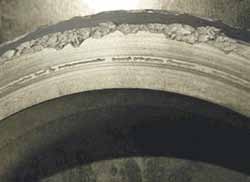
Figure 2. Silicon carbide mechanical seal face damaged by electro-corrosion
Ultra-Pure Water
The scaling concerns addressed in the previous section are a particular concern in industrial boiler and cooling tower systems. To address this issue, improve reliability and reduce boiler system maintenance costs, many fossil fuel and nuclear power plants have incorporated increasingly sophisticated feed water treatment systems. A recent trend in these treatment systems has included the use of ultra-pure water.
The combination of ultra-pure, deionized water with increased duty parameters of feed water pumps has resulted in a phenomenon known as “electro-corrosion.” Electro-corrosion can attack the rotating equipment—including the mechanical seal components. Electrical potential between dissimilar seal face materials is created in boiler feed pumps from friction at the seal interface and is normally safely discharged by conductive water around the seal. When electrical conductivity of high purity feed water falls below 2 µ Siemens/centimeter, it no longer acts as a conductor and instead allows electrical potential to build on the surface of the silicon carbide seal face.
Electro-corrosion occurs when this static charge builds on the silicon carbide face that is acting as a super capacitor. When the charge becomes large enough, it discharges to the mating face or even to a different point on the same silicon carbide surface. The extremely high temperatures from the arc created by this discharge can result in the localized ablation of material at the point of impact.
Sealing system designs to address electro-corrosion are currently under continued development. Some general, basic design approaches have been accepted for applications in which electro-corrosion is likely to occur. Mechanical seal manufacturers can address the root cause by selecting seal face materials with similar electrical conductivities. As noted in the flashing discussion, it is desirable to apply a carbon-graphite material mated with a hard face material (typically silicon carbide) in high temperature water applications. In the past when the ideal combination of seal face properties could not be found, efforts to mitigate the effect of electro-corrosion focused on the symptoms and approaches such as ammonia dosing and grounding brushes, which have met with mixed success.
By applying surface treatments or special coatings to silicon carbide seal faces, the electrical conductivity of the hard face can be matched quite closely to that of the carbon-graphite seal face. This approach addresses the root cause of electro-corrosion while permitting the use of the preferred seal face material combination, which includes a carbon-graphite seal ring.
Conclusion
These four issues are just some of the operating parameters that must be considered when selecting the most reliable mechanical seal system design for a water handling application. Working with your mechanical seal supplier will help ensure that all pertinent operating conditions are identified so a sealing system with maximum reliability can be selected for any water application.
Pumps & Systems, October 2011
Next Month: What are the key steps to cutting packing for optimum performance?
The following members of the Mechanical Seal Division sponsored this “Sealing Sense:”
Advanced Sealing International (ASI)
Ashbridge & Roseburgh Inc.
A.W. Chesterton Co.
Daikin America, Inc.
EagleBurgmann Mechanical Seals
Flex-A-Seal, Inc.
Flowserve, Flow Solutions Group
Garlock Sealing Technologies
Industrias Vago de Mexico SA de CV
John Crane
Latty International S.A.
Metallized Carbon Corp.
Morgan AM&T
Nippon Pillar Corp. of America
Scenic Precise Element Inc.
SEPCO - Sealing Equipment Products Co.
SGL Technic Polycarbon Division
H.C. Starck Ceramics GmbH & Co. KG