|
Written by Dr. Lev Nelik, P.E., APICS
|
|
Pumps & Systems, June 2007
Last month, we discussed applications of low head axial flow pumps ("Field Testing: Theory vs. Reality," Pumping Prescriptions, May 2007). Knowing your system is very important for these types of units. For example, consider a recent application where neglecting the system caused problems.
|
|
read more...
|
|
|
Written by Dr. Lev Nelik, P.E., APICS
|
|
Pumps & Systems, August 2007
How many gallons per minute are REALLY flowing out of that pump?
Perhaps the OEM pump manufacturer tested this pump at the factory - or perhaps not. You now have a pump, or perhaps it has been there for some time, and you suspect that it is no longer pushing the flow as it once did or is supposed to. The problem is there is no inline metering device to monitor the actual number of gallons. What can you do?
|
|
read more...
|
|
|
Written by Debra Lush, Belzona, Inc.
|
|
Pumps & Systems, November 2007
New heat activated epoxy-based materials are now being used to repair leaking and corroded pipe work when operations are unable to shut down.
|
|
read more...
|
|
|
Written by Joe Evans, Ph.D.
|
|
Pumps & Systems, November 2007
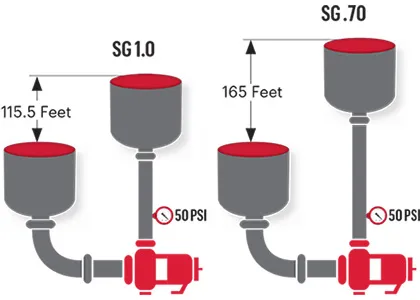
This past summer I received a suggestion from a Pumps & Systems reader to discuss siphons and their effect on pump head and pipeline flow. If you are like me, your first experience with one of these devices probably led to your first - and hopefully last - taste of gasoline. The siphon is an example of a natural and extremely simple machine that we take advantage of daily.
|
|
read more...
|
|
|
Written by Sylvia Ibarra, Piping Technology & Products, Inc
|
|
Pumps & Systems, December 2007
Industrial processes that manufacture, transfer, and distribute a variety of liquefied natural gases, from propane to oxygen to ammonia, require components to protect both the piping system and the pipe supports from the extremely cold temperatures. Pipe supports and piping that are not insulated may become brittle and crack, posing high risk to the piping and structural components.
|
|
read more...
|
|
|
Written by Jack Boteler and Larry Wende, Flowguard USA, and Peter Jennings, Flowguard Ltd.
|
|
Pumps & Systems, March 2008
The installation of properly sized pulsation dampeners minimize vessel costs while protecting the pump and piping system and improving process efficiency and accuracy.
|
|
read more...
|
|
|
Written by Tom Minihan, Griffin Dewatering Midwest, LLC
|
|
Pumps & Systems, March 2008
Soils with high concentrations of clay and silt can wreak havoc on construction sites, drain pipes, sewers and pumps. Users working with soils might want to consider geotextiles as a preventive maintenance alternative.
Soil erosion isn't just a problem for farmers, Niagara Falls and the Grand Canyon. Most construction projects have to contend with the effects of water on excavations-not only as a consequence of rainfall runoff but also from ground water intrusion. The mud common to most jobsites at one point or another-tracking over roads and clogging drainage ditches and storm sewers-has lead to the need for more effective control mechanisms that are "user friendly" and low cost. Textiles have been used for centuries to try to filter out the mud and let the water drain away; some original wellpoints used lamp wick and burlap to separate the water from the soil.
|
|
read more...
|
|
|