Motors

Topic Sponsor


Top Motors Articles

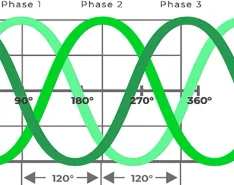
Most of the electric motor information we use on a daily basis is pretty straightforward. Voltage, amps, efficiency, and service factor are all well understood terms in our industry. There is, however, one motor characteristic that can be anything but straightforward. That characteristic is power factor (PF).
An argument in favor of IEEE-841's provision for motor bearing protection.
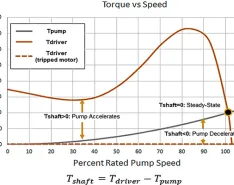
A large wastewater processing plant experienced continual problems with its influent raw wastewater pumps for several years. These pumps are rated at 70,000-gpm, 24-ft head and driven by 500-hp, 4000-V, 225-rpm Westinghouse brushless synchronous motors, 57.5-amps steady state rated current.
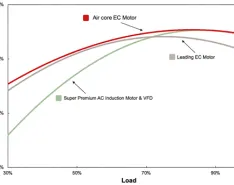
The U.S. has not enacted a wide-reaching, industrial energy efficiency bill since 1992 when the Energy Efficiency Policy Act was passed. This mandated that most general-purpose AC induction motors of 1 through 200 horsepower were required to be built to energy efficient levels per NEMA MG 1, Table 12-11 as of October 1997.
New motor starting controller provides one solution.

It is impossible to balance line-to-line voltages perfectly in a three-phase circuit. In fact, line voltages typically differ by a few volts or more, but a difference that exceeds 1 percent can lead to serious trouble on the plant floor. To maintain peak energy efficiency and thwart premature failure of three-phase motors, install adequate protective devices and periodically check for voltage unbalance at the motor terminals.

This three part primer is a basic introduction to AC power for those in the pump industry who need a place to start. It will also provide several web references to access if you would like to further your understanding of this interesting and essential topic.
Most of us probably never notice the spinning cylinder mounted between the pump and motor, except how easy it is to dis/assemble when a pump or motor is changed out. Otherwise, the disc coupling never factors into our daily routine.
Introduced February 8, 2008, the RPMAC PM Direct Drive Cooling Tower Motor and VS1CTD Drive for wet cooling towers replaces an existing motor, jack shaft and gearbox with a more efficient and environmentally responsible variable speed motor and drive with the motor mounted directly under the fan.
How do I move from my situation to a better one? In other words, is it possible to retrofit a less-than-optimal installation with a better solution, and how?

Latest Motors Articles

Electric motors have had a huge impact on the pump industry.
Improved motor starters help Fabri-Kal achieve its green vision.
Introduced February 8, 2008, the RPMAC PM Direct Drive Cooling Tower Motor and VS1CTD Drive for wet cooling towers replaces an existing motor, jack shaft and gearbox with a more efficient and environmentally responsible variable speed motor and drive with the motor mounted directly under the fan.
The Energy Independence and Security Act of 2007 (EISA), which restates and broadens the definition of General Purpose Electric Motors, goes into effect on December 19, 2010. Certain motors "manufactured (alone or as a component of another piece of equipment)" will be required to have nominal full load efficiencies that meet the levels defined in NEMA MG-1 (2006) (see Table 12-12). Motors manufactured after December 19, 2010, must comply with the law.
The freefall in electric motor sales is a direct effect of the worldwide economic downturn, which has severely depressed industrial and commercial productions. Despite the 20 to 30 percent drop in motor sales in 2009, manufacturers remain optimistic about the future market landscape, as the economic recovery, the need to improve energy efficiency and the demand in high growth sectors will create need for high performance motors.
The SI system is the modern day version of the metric system, and the U.S. gets a lot of grief for not embracing its inherent transportability across international boundaries. It is the standard in our scientific community and its use is increasing in our engineering and industrial sectors, but it is still pretty unpopular with the proletariat. Why? Because the units of measure are totally unusable by most of us.
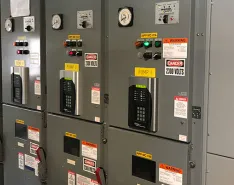
With highly reliable electrical systems, protective relays may be called upon to operate very infrequently. However, the effects of faults and abnormal conditions can be severe and protective relay systems must be designed carefully to protect against the worst possible fault conditions.

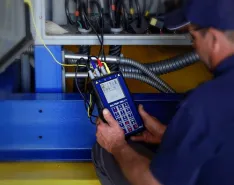
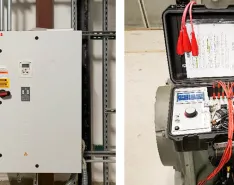
Due to the expense and labor required, most facilities need to maximize the life of their motors. Electrical, insulation resistance and thermal measurement are three tests that can troubleshoot motors, drives and associ­ated electrical panels and prolong their operational lifetime. Ther­mal imagers can detect potential problems and insulation resistance and electrical tests can deter­mine the cause.

With highly reliable electrical systems, protective relays may be called upon to operate very infrequently. However, the effects of faults and abnormal conditions can be severe and protective relay systems must be designed carefully to protect against the worst possible fault conditions. 

In many pump installations, problems such as jams and suction loss can lead to serious damage to the motor or pump long before the thermal overloads trip. These problems can be quickly detected by monitoring drive motor current.

Columns and Blogs

The performance of a centrifugal pump with a trimmed impeller will follow the affinity laws as long as that trim is relatively small.
Standards for repair will begin with a standard for vertical turbine pumps.The pump industry is undergoing renewed interest in the technical aspects and quality of repairs.
Charlie Jackson was unaware of any centrifugal pump manufacturer that knew how to calculate hydraulic axial thrust produced within liquid ends of their pumps.
© Copyright Cahaba Media Group 2012. All Rights Reserved. Privacy Policy | Terms & Conditions