




Data and life cycle management technology helps refineries maintain equipment and reduce the total cost of ownership.
Typically, 90 percent of the total life cycle cost (LCC) of a flow management system is accumulated after the equipment is purchased, installed and operating as desired for the designed process parameters.
Rotating equipment manufacturers now offer a comprehensive suite of services and solutions designed to provide plant operators with unprecedented value and cost savings throughout the life span of the flow management system.
This approach to high-value asset management has already been embraced by the aircraft industry (commercial and freight airlines). Many of the world's leading jet engine manufacturers now offer “power by the hour” arrangements. Power by the hour is capable of monitoring jet engines while in flight. The jet engine manufacturers developed this technology to provide real-time diagnostic and prognostic analyses. This enhances the availability factor of the jet engine and at the same time reduces the total LCC.
The business and operational challenges within modern process plants are numerous and not unlike the challenges faced by the airline industry today. Process plant operators face the pressures of increasing productivity and maximizing the return on investment this is seemingly at odds with the everyday realities of decreasing plant operating budgets, rising energy costs and increasing operational costs.
Asset Management Programs
A new asset management program is available that is an evolution of the traditional pump equipment manufacturer's capabilities and goes beyond simply selling equipment, to include a suite of resources and tools designed to relieve these stresses and reduce the total asset life cycle costs (LCC). These programs will:
- Improve equipment reliability and performance
- Reduce energy consumption
- Manage inventories
- Reliably assist with maintaining process equipment
Modern asset management programs are designed to address these issues, while allowing facilities to allocate funds for planned maintenance spending and remove the uncertainty from operating budgets. The visibility gained into the actual operating conditions in the plant combined with the expertise brought to bear through the program result in efficiencies and maximized uptime.
Asset optimization solutions are tailored to address any combination of issues according to customer priorities and business strategies.
Asset optimization solutions will assist with:
- Increasing plant availability and output
- Developing and enhancing workforce knowledge
- Improving the safety and environmental issues
The Ebullated Bed Process
The ebullated bed process is a highly efficient way of handling petroleum bottoms and other heavy hydrocarbons for purification or conversion to distillate. This process is categorized as a hydrogen addition process versus delayed coking, which is known as a carbon removal process and is inherently less efficient than hydrogen addition processes.
The processes feature high yields and high removal of contaminants in a safe, reliable, easy-to-operate plant with a low investment. Two companies design, engineer and license the ebullated bed process—Chevron Lummus Global (CLG) with the LC-Finer process and Axens with the H-Oil process.
Both these processes rely on the reactor ebullating pump to continuously recirculate the hydrocarbon liquid feed, catalyst and hydrogen within the reactor vessel.
The reactor ebullating pump technology was developed more than 50 years ago. The original pump was an external pump installed and supported by the suction and discharge pipes. This pump is still operating today in a Middle East refinery. In addition to this original installation, 15 other refineries globally use more than 60 reactor ebullating pumps in ebullated bed processes. All systems are operating 24/7/365.
Both of the ebullated bed process designs require that the reactor ebullating pump be un-spared. It must operate at high suction and ultra high temperatures. Typical reactor temperatures and pressures range up to 900 degrees F (480 degrees C) and 3,200 psig (220 barg). Because of this unique environment, a pump of ultra high reliability was designed. The type primary reactor (PR) pump comprises of a pump, variable frequency drive, electric motor and heat exchanger and is enclosed within a forged alloy steel housing with an externally mounted, high-pressure clean oil injection system.
Critical Processes Ideal for Asset Management Programs
The new asset management program, which can be used with a reactor ebullating pump system, currently operates at two refineries that have ebullated bed hydrocrackers. The new program is also now standard on all new H-Oil and LC-Finer projects that incorporate the reactor ebullating pump system.
The program includes 24/7/365 remote monitoring of the reactor ebullating pumps using a communication system. See Figure 1.
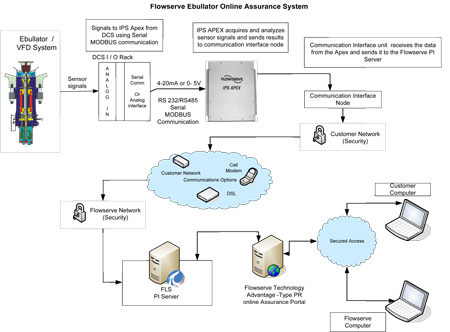
Figure 1. Remote monitoring system architecture
This program provides monitoring and life-cycle management to optimize asset availability. The technology incorporates an advanced algorithm that uses the acquired signals from the pump and system to provide alarms, which notify of any problems with the thrust bearing safety factor, motor winding, temperature or motor slip.
In addition, the algorithm can provide data on the catalyst fraction and gas fraction in the pump suction and within the reactor vessel. An additional benefit is the system's ability to provide guidance on the remaining life of electric motor windings, thrust bearing and the pump components following upset conditions and to avoid unnecessary plant shutdowns.
Using the data provided by the monitoring equipment, further detailed analysis can be carried out by the manufacturer's asset management specialist and the refineries reliability and maintenance engineers. This includes the ability to determine the causes of alarms.
For example if the thrust bearing safety factor alarm is activated, the possible causes are the injection oil viscosity is out of design specification or the thrust bearing is under or overloaded. The secondary indicators that can also be viewed on the technology advantage communication platform are that the:
- Pump speed is too high
- Injection oil temperature is too high
- Apparent liquid density is too high
- Injection oil flow rate too high
The data historian that is part of the platform will then enable a root cause analysis from the creation of trend data. The platform has the ability to construct trend tables for single events or multiple events and also to build trend tables that compare time-based key parameters against each other.
The system also has an additional feature that allows for advanced process diagnostics with the ability to diagnose:
Carryover events—Solids in the catalyst bed enter the suction of the pump and impeller, causing an obstruction in the flow.
Catalyst bed compression—The catalyst bed becomes filled with solids causing a dead-head condition within the reactor vessel.
Impeller jam—Large solids in the system lodge in the impeller inlet causing it to stall.
Gas holdups—The catalyst bed partially fills with trapped gasses, reducing the flow through the unit.
Key performance indicators and operating data are displayed using the technology advantage communicationplatform. The system can send SMS, email or telephone alerts to warn refinery operators of potential issues. The alerts are also capable of being sent to and seen on mobile handheld devices. The system allows secure, 24/7/365 access to these alerts. See Figure 2.
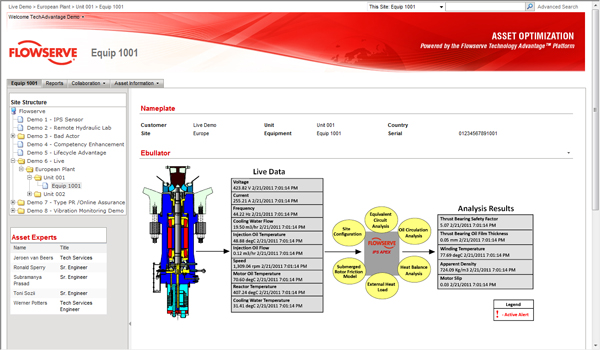
Figure 2. Technology advantage platform screen shot
The knowledge gained through the implementation of the asset management technology for reactor ebullating pump systems provides the ebullated bed process plant operator with the real-time health of the ebullating pump system. This will help prevent any unplanned outages. Since the ebullated bed process operates with un-spared pumps, this is critical. A single unplanned outage could result in a process shutdown for 10 to 14 days. Losses can be in the millions of dollars.
In addition, knowing the current state of the health of the reactor ebullating pump system allows the plant operator to schedule shutdowns more efficiently. The pump “remaining life” indicator provides a continuous countdown in days, hours or weeks.
The algorithm within the program constantly updates this countdown based on an analysis of the contributing events. The algorithm is updated continuously with knowledge acquired through the monitoring of all the connected systems. Updates can be remotely uploaded to the program.
Through the application of advanced technologies and with the cooperation of product and industry experts, The program's users can proactively manage every facet of equipment life cycle costs. In doing so, process plant operators can look beyond traditional equipment and aftermarket purchase agreements for alternative, value-based business relationships that focus on performance and results.
Bottom-Line Results
Highly efficient oil conversion technologies such as the ebullated bed process increase the refiner's ability to produce saleable products more effectively. To also realize maximum LCC reduction, oil refiners should institute comprehensive asset management programs. These programs must include the latest technology in equipment monitoring and diagnosis, inventory management and data availability.
These programs enable facilities to evolve from reactive planned maintenance to strategic predictive maintenance, minimizing emergency shutdowns, downtime and operating budgets while maximizing production and equipment availability, system visibility and the efficiency of maintenance resources. Combined with expert knowledge and industry experience, asset management programs are a powerful way to impact the bottom line.
Pumps & Systems, April 2011