






The fundamentals of how power quality issues affect the plant, how to detect them and how to make them go away
If the quality of the electricity that a plant consumes is not what it should be, it costs the company more than is necessary. Poor power quality shortens the life of equipment, trips automated equipment and produces extraneous heat that must be removed. Ironically, many of these issues originate inside the plant.
The Many Faces of Power Quality Issues
The electrical power issues that most frequently affect industrial plants include voltage sags and swells, harmonics, transients and voltage and current unbalance. The proper tools to correct these issues include knowledge and electrical test instruments ideally suited for each task.
Plant operators also need an accurate one-line diagram of the facility. The one-line diagram identifies the AC-power sources, the loads they serve and their ratings—an operator's electrical road map of the facility. Investigating power quality problems without it is nearly impossible.
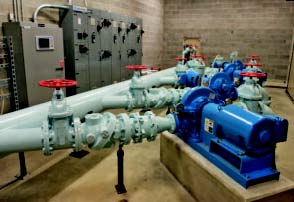 |
| Equipment is vulnerable to power quality issues and may contribute to them. |
Testing, measuring, troubleshooting, repairs or any other work performed on any electrical system should be performed only by qualified personnel who have been trained to perform these functions safely, using proper procedures and using test tools rated for the specific electrical system.
Sags
A sag is a reduction in voltage magnitude between 10 and 90 percent of the normal root mean square (RMS) voltage for more than eight milliseconds (one half cycle at 60 Hz) and less than one minute, according to the Institute of Electrical and Electronics Engineers (IEEE). Industrial equipment such as programmable logic controllers (PLCs), robots and variable frequency drives (VFDs) are sensitive to voltage sags.
More than 50 percent of voltage sag events originate from within the same building due to increases in current requirements, such as starting large inductive loads (typically motors) that create temporary inrush current conditions. However, voltage sags come from external events as well. Most external events that result in voltage sags are nature related, but some are because of careless human behavior.
Detecting sags can be quite challenging because predicting when they will occur is difficult. Operators can use the min/max function of a high-quality digital multi-meter (DMM) to detect single, worst-case sags of 100 milliseconds or more while energizing the load. For suspected recurring sags, use the sags & swells trending feature on a high-quality power-quality analyzer.
If an operator needs to document power quality events for a longer duration, event recorders are available that can record sags, swells, outages, transients and frequency deviations for several weeks.
Correcting problems that cause sags usually comes down to electrical engineering best practices. For example, wiring should be adequate for the loads they feed. Minimize source impedance by limiting the length of feeder runs to subpanels. Don't cascade subpanels off other subpanels. Reduce the load on the panel if necessary and if possible. Transformers should not be overloaded. Such overloading can also increase harmonics, which are discussed in the next section.
Correct wiring and/or loading issues first. When the plant is in order, then other sag-mitigating solutions can be pursued, such as voltage regulators and constant voltage transformers.
Harmonics
Harmonics are multiples of a fundamental frequency. They cause trouble when combined with the fundamental electrical waveform. When harmonics mix with the fundamental, they distort the sine wave. Devices that conduct current for less than the entire voltage sine wave are non-linear loads, and generate harmonics. This includes any device with a rectifier and pulse-generating devices such as VFDs, electronic ballasts, electronic test equipment and switched- mode power supplies.
Since harmonic current flowing through system impedances generates harmonic voltage distortion, it also creates voltage drops. In severe instances, this voltage distortion can cause thermal tripping of relays and protective devices and logic faults in PLCs and VFDs. As voltage distortion increases, linear loads begin to draw harmonic current. In motors, some of these harmonic currents—most notably the fifth and eleventh harmonics—create counter-torque in the motor, causing it to draw more current—which decreases motor efficiency, increases heating and shortens motor life.
Operators can measure harmonics at the point of common coupling using a power quality analyzer or a harmonics analyzer. For simple snapshots, operators can use a high-quality DMM for harmonic voltage or a high-quality clamp meter for harmonic current. However, the DMM and clamp meter must be true rms because true-rms test tools are necessary for accurate measurements of distorted waveforms.
Many six-pulse VFDs generate fifth and seventh harmonics. However, 12- and 18-pulse drives help reduce harmonics because as the number of pulses increase, their amplitudes decrease. Other solutions for mitigating drive-generated harmonics include passive front-end chokes/filters, harmonic trap filters and active filters.
Transients
Transients are momentary excursions of voltage above the normal sine wave. Their magnitudes can be more than five to 10 times the nominal system voltage. Transients are different from surges. A surge is a high-energy transient, which is usually associated with lightning strikes.
Most transient-causing events happen inside the plant. These include capacitor switching, current interruptions, power elec-tronics operation, arc welding, contact and relay closures and loads starting up or disconnecting.
When transient voltages exceed electrical insulation ratings, the stress can lead to gradual insulation dielectric breakdown or possibly abrupt failure. Transients also deteriorate solid-state components. A single high-energy transient can puncture a solid-state junction, and sometimes repetitive low-energy transients can have the same effect.
Operators can detect lower-speed transients using the same tools and techniques that they would use to detect sags. Nearly all electronic equipment manufactured within the last three decades includes some level of transient protection, typically a metal oxide varistor. Transient voltage surge suppression (TVSS) provides additional transient protection. Operators can apply TVSS protection at several points throughout the facility depending on protection equipment type. Apply Category C equipment at the service entrance. Apply Category B equipment at distribution panels, and apply Category A equipment at the individual circuit level.
Voltage Unbalance and Current Unbalance
Voltage unbalance is the measure of voltage differences between the phases of a three-phase system. It degrades the performance and shortens the life of three-phase motors. Voltage unbalance at the motor stator terminals causes high current unbalance, which can be six to 10 times as large as the voltage unbalance. Unbalanced currents lead to torque pulsation, increased vibration and mechanical stress, increased losses and motor overheating. These unbalances may also indicate maintenance issues, such as loose connections or worn contacts.
Operators can make some basic phase-to-phase voltage unbalance measurements using a high-quality DMM and phase-to-phase current unbalance measurements using a high-quality clamp meter. Accurate, real-time unbalance measurements need a three-phase power quality analyzer to pinpoint unbalance problems. Open circuits and single-phase to ground faults are easier to correct than load balancing, which typically requires corrective, system-level design changes.
Behind Closed Doors
Troubleshooting or testing for power quality problems usually requires that technicians take electrical measurements while the equipment is energized. This puts them at risk and requires that they use appropriate personal protective equipment (PPE). However, technicians and electrical workers can find some power quality and electrical reliability issues without the associated risks—thanks to thermal imaging.
Experienced electrical workers use infrared (IR) cameras or imagers to perform thermographic inspections, which should be performed at least annually according to NFPA 70B. Historically, IR inspections required that equipment be fully energized and running and panels be open so that switchgear or panel components were visible. Unfortunately, open panel inspections expose workers and equipment to hazards such as arc flash, shock or electrocution.
IR windows installed in panel doors eliminate the need for panel doors to be open. They allow thermographers or trained electrical workers to acquire images of energized and loaded electrical components safely because the doors are closed. Equipment and components that technicians can inspect with thermal imagers typically include:
- Three-phase power distribution and switchgear
- Fuse boxes
- Cables and connections
- Relays and switches
- Insulators
- Capacitors
- Circuit breakers
- Electric motors
- Motor controllers
- Transformers
- Battery banks
- Substations
Unbalances, Overloads and Intermittent Connections
Although IR thermography will not detect every power quality problem, it is useful when performing preliminary checks for unbal-ances, overloads and intermittent connections. Most thermal imaging is a comparative, qualitative process. Look for spots that are un-expectedly hotter than similar equipment under the same load conditions. Hotspots could indicate unbalanced loads, triplen (third harmonic) current in neutrals, overload/excessive current, loose or corroded connections, insulation failure, component failure, wiring mistakes or underspecified components.
When looking for problems with a thermal imager, maximum electrical equipment loading conditions are ideal. If maximum loading is not possible, the equipment should be under at least 40 percent of nominal load.
When checking for three-phase unbalance, capture thermal images of high-load connection points such as drives, disconnects and controls. Compare the phases, checking for apparent temperature differences. Hot conductors may be undersized or overloaded. Heavily-loaded phases will appear warmer, while a comparatively cooler circuit leg could indicate a failed component. Since an unbalanced load, overload, bad connection and harmonics can create similar thermal patterns, follow up with actual measurements using a digital multi-meter (DMM), power quality analyzer or a harmonics analyzer to troubleshoot and diagnose specific problems.
When checking for connection and wiring problems, look for connections with higher temperatures than similar connections under the same electrical and loading conditions. Hotspots associated with connection problems typically appear warmer at the spot of high resistance and cooler as distance from the spot increases.
Eventually, every plant experiences electrical equipment failure and power quality problems. When equipment or components deteriorate, often thermography can detect their warning signs before they fail. Using IR windows enables experienced thermographers and electrical workers to locate problems before they become major downtime issues—safely.
Conclusion
Power quality issues are frequently interrelated. Address them from an entire plant approach without losing focus on how they affect individual loads. Sometimes, fixing one power quality problem can make another problem worse. Looking at the big picture by using a three-phase power quality analyzer enables operators to correct the causes of power quality issues and not just doctor the symptoms.